

A seasonal campaign can be perfectly written and still miss the mark. The reason is simple: in international marketing, translating a holiday or event does not guarantee that the message will feel relevant or resonate locally.
National calendars, religious traditions, commercial habits, cultural sensitivities, and seasonal differences all shape how audiences respond. The same marketing campaign can perform very differently from one market to another. What works well in one country may feel flat, out of place, or awkward in another.
That is why localizing holidays and events means adapting much more than words. It means aligning the content, timing, visuals, and marketing promise with the actual expectations of local audiences.
Why Translation Alone Is Not Enough
Translating labels such as “summer sale,” “Christmas campaign,” or “back-to-school” may be linguistically correct and still be ineffective from a marketing perspective.
Several limitations quickly appear:
- the holiday does not exist in the target market;
- it exists, but does not carry the same importance;
- it is not associated with the same buying behaviors;
- its timing differs from one country to another;
- the symbolic references attached to it are different;
- the expected tone is not the same.
Take a common example: a brand rolls out a year-end campaign designed for a Western market, complete with its visuals, colors, slogans, and promotional rhythm. In other countries, the festive period may not be structured around the same key moments. Even if the message is well translated, it can lose impact because it does not match local reference points.
This is exactly where localization matters: it replaces a duplication mindset with an adaptation mindset.
What It Really Means to Localize a Holiday or Event
Localizing a campaign tied to a holiday or event means answering five questions:
- What is the local equivalent of this key moment? It may be the same holiday, a related event, or a different commercial moment altogether.
- What is its cultural meaning? A holiday may be family-centered, religious, institutional, community-based, or mainly commercial.
- When is the right time to communicate? The peak attention window does not always align with the date of the event itself. In some markets, anticipation is critical; in others, the opportunity window is very short.
- Which visual and narrative codes are expected? Colors, imagery, level of formality, message types, and emotional tone all vary.
- Does the offer itself need to be adapted? In some cases, adjusting the communication is not enough. The featured product, promotional format, or user journey may also need to change.
In other words, holiday and event localization affects language, content, design, marketing, and customer experience at the same time.
The Main Gaps to Anticipate Across Markets
1. Calendar Differences
Events do not happen at the same time everywhere, and some follow variable calendars. This has a direct impact on:
- editorial planning;
- media activation dates;
- CRM sends;
- production timelines;
- commercial operations;
- local team availability.
One common mistake is to manage international campaigns from a central calendar with little room for local adjustment. The result is predictable: content goes live too early, too late, or at a moment that is not especially relevant for the intended audience.
2. Differences in Meaning
Two markets may share the name of a holiday without sharing its significance. The same event may be:
- widely celebrated in one country and secondary in another;
- associated with family in one place and consumption in another;
- highly symbolic in one region and treated more lightly elsewhere.
This is often where missteps happen. A brand may use a promotional tone that feels too aggressive for a period perceived locally as more solemn, or stay too formal during a highly commercial peak.
3. Differences in Cultural Codes
Holiday visuals and symbols are never truly universal. The same color palette, animal, object, gesture, outfit, or staging can be well received in one market and feel irrelevant in another.
The same applies to wording:
- greetings;
- emotional hooks;
- humor;
- family references;
- calls to purchase;
- promises tied to sharing or generosity.
Localization therefore requires contextualization, not just linguistic conversion.
4. Differences in Seasonality
A campaign built around winter, the warmth of home, or summer vacation cannot simply be rolled out unchanged everywhere. Since seasons are reversed or experienced differently depending on the region, some visual and emotional frameworks become inconsistent.
This is especially important for sectors that rely heavily on strong visual worlds: retail, tourism, food, cosmetics, fashion, education, leisure, or software brands running seasonal campaigns.
5. Differences in Commercial Maturity
Not all markets respond the same way to major marketing moments. Some events are already firmly established in commercial practice; others remain marginal or only matter to specific audience segments.
It is therefore risky to assume that a holiday heavily monetized in one country should automatically become a performance driver elsewhere.
The Most Common Mistakes in International Campaigns
Translating an Event Name Without Checking Local Relevance
An expression may be correctly translated and still feel foreign to local usage. The audience understands the words but does not see itself in the campaign.
Reusing the Same Visuals Everywhere
A global creative library saves time, but it can also flatten content that should instead reflect local sensitivities.
Enforcing a Single Campaign Calendar
Centralization makes coordination easier, but a rigid schedule often penalizes markets that need a different pace.
Mistaking Cultural Respect for Message Neutralization
To avoid mistakes, some brands create content so generic that it loses any local resonance. Effective localization is not about smoothing everything out. It is about making the message feel right.
Forgetting the Impact on the Full Journey
If an ad references a local holiday, but the landing page, emails, product visuals, or customer support remain generic, the experience becomes inconsistent. Localization needs to be planned end to end.
How to Build a Real Event Localization Strategy
1. Map Key Moments by Market
The first step is to build a local map of relevant events. It should distinguish between:
- religious holidays;
- national celebrations;
- cultural events;
- commercial peaks;
- seasonal consumption patterns;
- sensitive periods to avoid.
This mapping prevents overreliance on a global marketing calendar. It also helps identify where an event should be prioritized, adapted, or dropped.
2. Define the Level of Adaptation Required
Not every event requires the same localization effort. Several levels can be identified:
Light Adaptation
The key moment exists locally and the codes are similar. Adapting the copy, date format, tone, and a few visuals may be enough.
Moderate Adaptation
The campaign keeps the same objective but requires more substantial rewriting, a different creative selection, and a timing adjustment.
Local Recreation
The key moment has no direct equivalent or requires a market-specific campaign logic. In that case, it is better to design a local message than to force a global concept into the market.
This framework helps teams avoid over-localizing some content and under-localizing the content that truly needs it.
3. Use Cultural Validation Criteria
Before launch, every campaign tied to an event should be reviewed across several dimensions:
- contextual accuracy;
- relevance of the reference;
- appropriateness of tone;
- suitability of visuals;
- religious or social sensitivity;
- consistency between the promise and local usage.
This validation is not just a linguistic task. It requires both cultural and marketing judgment.
4. Align Content, Offer, and User Experience
A localized campaign is more credible when the whole setup follows the same logic:
- ad;
- landing page;
- conversion flow;
- follow-up email;
- visual assets;
- transactional messages;
- customer support, if needed.
For example, highlighting a local celebration without adapting payment methods, logistics, promotional mechanics, or reassurance elements can limit results.
5. Measure Performance Market by Market
Localized event campaigns need to be evaluated with a granular view. Relevant metrics may include:
- engagement rate;
- click-through rate;
- conversion;
- revenue generated;
- traffic quality;
- creative performance by variant;
- qualitative feedback from local teams.
This analysis helps identify what is driven by timing, messaging, channel choice, or even the relevance of the event itself.
Questions to Ask Before Launching a Campaign
Before adapting an international campaign to a local holiday or event, a marketing team can ask:
- Is this event truly meaningful for our target audience in this market?
- Is it a cultural, institutional, religious, or commercial moment?
- Is a promotional tone appropriate?
- Is the communication window correct locally?
- Are our visuals culturally consistent?
- Does the message convey the right intent, or just translated words?
- Is there a better local alternative to the global concept?
- Is the featured product or service relevant for this specific moment?
- Does the rest of the customer journey reflect the same level of adaptation?
This kind of checklist helps teams avoid treating event localization as a last-step translation task.
The Right Operating Model for Marketing Teams
In international organizations, the strongest campaigns are often those that combine a clear global framework with real local autonomy.
An effective model can rely on:
- a group-wide calendar of priority moments;
- brand and tone guidelines;
- adaptable creative kits;
- cultural validation rules;
- local decision-makers who can make trade-offs;
- workflows that bring localization in early enough.
The goal is to avoid two extremes:
- over-centralization, which produces polished campaigns that are disconnected from markets;
- over-fragmentation, which weakens brand consistency and operational efficiency.
The right approach is to standardize the method, not the final output.
Translation, Transcreation, or Local Creation?
When holidays and events are involved, choosing the right level of intervention is strategic.
Translation
Translation works when the message, context, and references are already valid in the target market.
Transcreation
Transcreation becomes useful when the marketing intent needs to remain the same, but the wording, rhythm, emotion, or references need to be reworked.
Local Creation
Local creation is necessary when the source campaign is built around an idea that does not exist locally, or when another key moment is more relevant for the market.
Trying to translate everything is rarely the best option. The real question is not “How do we translate this campaign?” but “What is the best way to activate this moment in this market?”
What Brands Gain From Better Localization of Key Moments
A well-designed event localization strategy helps brands:
- increase message relevance;
- improve local engagement;
- avoid cultural missteps;
- better align marketing and sales;
- optimize media investment;
- project a more attentive and credible brand image.
For a B2B company as much as for a consumer brand, this is also a sign of international maturity. A company that understands local key moments shows that it is not simply exporting a message. It is making the effort to connect with real market behavior.
Conclusion
Localizing holidays and events means recognizing that a marketing calendar is never universal. Behind what looks like a simple date are deeper issues of culture, timing, symbolism, and conversion.
Translation remains a useful building block, but it is not enough when a message is rooted in social practices and cultural references. To perform well, an international campaign needs to be designed at market level, not just adapted afterward.
When it comes to key moments, the difference between a merely translated campaign and a truly localized one is immediately visible: one speaks correct language, the other speaks to the right audience, at the right time, in the right way.
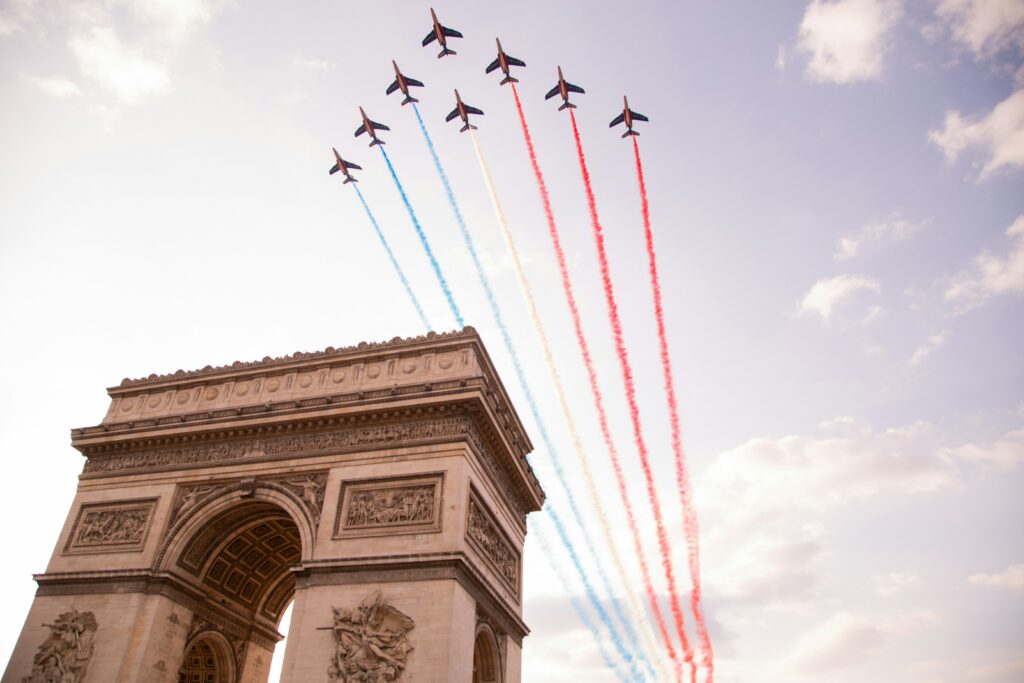
Photo by Mathurin NAPOLY / matnapo from Unsplash
A question after reading?